

Modern life operates at a relentless cadence. Between demanding professional obligations, digital overstimulation, and constant multitasking, the human nervous system frequently remains locked in a heightened state of alert. Over time, this chronic activation of the stress response elevates circulating cortisol, stiffens skeletal muscles, fragments sleep architecture, and leaves the mind in a state of continuous agitation.
While high-intensity workouts and vigorous exercise offer distinct cardiovascular benefits, they also place additional stress on an already overtaxed system. When the body is depleted, forcing it through exhausting physical routines often compounds fatigue rather than relieving it. Gentle yoga offers an essential counterweight. By pairing passive postures, slow rhythmic transitions, and intentional breathwork, gentle yoga creates the physiological conditions required for profound relaxation, cellular repair, and genuine rest.
Understanding the Physiology of Relaxation
True relaxation is not merely the absence of movement; it is an active biological state known as the parasympathetic response. Often referred to as the rest and digest system, the parasympathetic branch of the autonomic nervous system conserves energy, slows heart rate, promotes digestive motility, and stimulates tissue regeneration.
Gentle yoga directly accesses this healing state through several physiological pathways:
-
Vagal nerve stimulation: The vagus nerve serves as the primary communication highway between the brain and major internal organs. Slow, deliberate diaphragmatic breathing and gentle inversion postures mechanically stimulate the vagus nerve, prompting a drop in systemic blood pressure and heart rate.
-
Reduction of muscular guarding: Chronic emotional tension causes muscles to brace involuntarily, particularly around the neck, shoulders, hips, and lower back. Holding passive, supported shapes signals muscle spindles to release their grip, restoring healthy tissue elasticity without force.
-
Downregulation of sympathetic tone: By removing the pressure to achieve, perform, or sweat, gentle yoga halts the release of adrenaline, allowing the adrenal glands to rest and the endocrine system to rebalance.
Essential Principles of Gentle Yoga
Practicing gentle yoga differs fundamentally from dynamic styles like Vinyasa or Ashtanga. To experience its full restorative benefits, you must approach the mat with a distinct mindset and methodology.
-
Support over strain: The goal is never to push to the outer edge of flexibility. Instead, aim for roughly sixty percent of your maximum range of motion, allowing gravity and time to dissolve tightness naturally.
-
Strategic use of props: Bolsters, folded blankets, yoga blocks, and straps are not crutches for the inflexible; they are therapeutic instruments. Props support your skeletal structure, allowing your neuromuscular system to fully let go of tension.
-
Duration over repetition: Rather than moving quickly through dozens of postures, gentle practices involve holding a small handful of shapes for three to ten minutes each. This sustained stillness gives the nervous system time to settle into deep safety.
-
Mindful presence: As the physical body slows down, the mind often races to fill the silence with to-do lists and worries. Gently anchoring your attention on the physical sensations of each breath trains the mind to remain anchored in the present moment.
Restorative Postures for Deep Physical Release
The following postures can be practiced in sequence as a complete evening routine or used individually whenever stress feels overwhelming. Prepare your environment beforehand by dimming the lights, silencing your phone, and ensuring the room is comfortably warm.
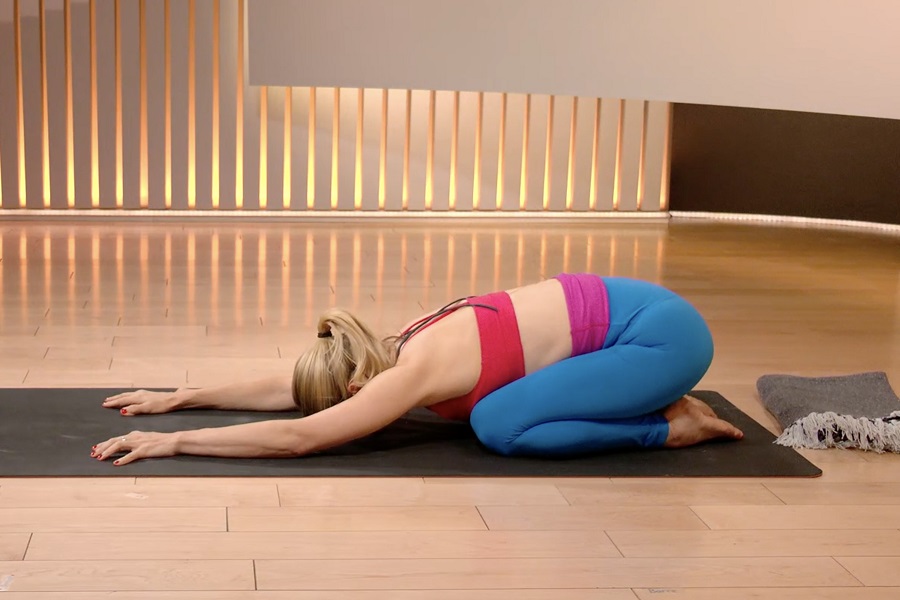
Supported Child Pose
This forward-folding posture gently decompresses the lumbar spine, opens the hips, and fosters a comforting sense of safety and introspection.
-
Place a supportive bolster or a stack of folded blankets lengthwise along the center of your mat.
-
Kneel with your big toes touching and separate your knees wide enough to nestle the bolster between your inner thighs.
-
Walk your hands forward, gently lowering your torso onto the bolster so your chest, abdomen, and one cheek rest fully supported.
-
Drape your arms alongside the bolster, letting your elbows soften and your shoulders fall away from your ears.
-
Close your eyes and breathe deeply into the back of your lungs, feeling your ribcage expand laterally with every inhalation.
-
Turn your head to the opposite side halfway through your stay to keep your neck balanced, remaining in the pose for five to seven minutes.
Reclining Bound Angle Pose
This restorative staple opens the heart center, relieves tension across the chest and shoulders, and gently stretches the inner groins.
-
Position a bolster lengthwise behind you, placing a block under the far end to create a gentle incline if you prefer slight head elevation.
-
Sit on the mat with your lower back touching the base of the bolster.
-
Bring the soles of your feet together and let your knees fall open toward the sides, forming a diamond shape with your legs.
-
Support the outsides of your knees with yoga blocks or rolled towels to prevent strain on your inner thighs and hips.
-
Recline backward along the length of the bolster, resting your head comfortably.
-
Open your arms out to the sides with your palms turned upward, allowing your pectoral muscles to release.
-
Remain in this shape for eight to ten minutes, breathing into your lower abdomen.
Legs-Up-the-Wall Pose
Perhaps the most potent restorative posture in yoga, this passive inversion relieves tired lower limbs, assists venous blood return to the heart, and soothes an overstimulated nervous system.
-
Sit sideways next to an open wall, bringing one hip as close to the baseboard as comfortably possible.
-
Gently pivot your torso toward the mat while swinging your legs up the wall, lowering your back, shoulders, and head down onto the floor.
-
Adjust your position so your sit bones rest against or a few inches away from the wall, allowing your legs to remain upright with minimal effort.
-
If your hamstrings feel tight, slide your hips further back from the wall or place a folded blanket beneath your pelvis.
-
Rest your hands on your lower belly or let your arms open wide in a soft T-shape.
-
Soften your jaw, relax your throat, and let gravity draw fluid and tension out of your feet, calves, and thighs for ten to fifteen minutes.
Supported Bridge Pose
This gentle backbend elevates the hips above the heart, expanding the chest and relieving compressive tension in the lower back without active muscular effort.
-
Lie flat on your back with your knees bent and feet planted flat on the mat, hip-width apart and parallel.
-
Press into your feet to lift your hips a few inches off the floor.
-
Slide a yoga block on its lowest or medium setting directly underneath your sacrum, the flat triangular bone at the base of your spine.
-
Lower your hips down so the block carries your full pelvic weight, making sure the block does not press into your flexible lumbar spine.
-
Keep your arms relaxed by your sides, palms facing the sky, and gently tuck your shoulder blades underneath your back.
-
Hold this supported inversion for three to five minutes, allowing your hip flexors and abdominal wall to soften completely.
Breathwork for Calming the Mind
The physical postures of gentle yoga work in synergy with pranayama, or conscious breath control. Modulating the breath allows you to communicate directly with your autonomic nervous system, transforming mental unease into grounded calm.
-
Diaphragmatic belly breathing: Lie comfortably on your back with one hand on your chest and the other on your abdomen. Inhale slowly through your nose, guiding the air deep enough to elevate your belly while keeping your upper chest completely quiet. Exhale softly through your nose as your abdomen naturally falls. Repeat for five minutes.
-
Extended exhalation practice: Inhale smoothly through your nose for a count of four, pause for a moment at the peak, and then exhale slowly through your nose for an uninterrupted count of eight. Doubling the length of the exhale stimulates the parasympathetic nervous system, lowering your heart rate within minutes.
-
Alternate nostril breathing: Sit in a comfortable supported seat. Use your right thumb to gently close your right nostril, inhaling slowly through the left nostril. Close the left nostril with your ring finger, release the thumb, and exhale through the right nostril. Inhale through the right side, close it, and exhale through the left. Continue this soothing, balancing cycle for five to ten rounds to clear mental clutter before rest.
Creating a Sustainable Home Routine
Building a restorative yoga practice does not require setting aside hours of uninterrupted time. Dedicating just twenty minutes before bed or after a challenging workday produces compounded physical and emotional benefits. Treat this time as a sacred boundary between your daily duties and your recovery. By honoring your body need for stillness and slow movement, you build the internal reserves necessary to meet everyday life with balance, patience, and lasting vitality.
Frequently Asked Questions
Can someone who is extremely inflexible still practice gentle yoga?
Inflexibility is actually one of the best reasons to start gentle yoga. Dynamic practices often demand high mobility, but gentle and restorative yoga uses props like blocks, cushions, and folded blankets to bring the floor up to meet your body. You never need to touch your toes or twist into complicated shapes. The entire goal is finding a comfortable, supported position where your muscles can release stored tension without strain.
How does gentle yoga differ from traditional Yin yoga?
While both styles focus on longer holds and quiet stillness, their underlying physiological intentions are different. Yin yoga targets the deep connective tissues, ligaments, and fascial networks by holding poses with moderate muscular tension and controlled physical stress. Gentle and restorative yoga, by contrast, eliminates physical effort entirely by using props, aiming for zero muscular engagement so the nervous system can reset completely.
Is it safe to fall asleep during restorative yoga postures?
Falling asleep during a restorative posture is entirely normal and simply signals that your body has finally downshifted into deep relaxation. However, remaining asleep in certain asymmetric postures for hours might cause joint stiffness or numbness. To get the maximum benefit, try to maintain a state of soft, conscious awareness during the poses, reserving deep sleep for when you transition into your bed after practice.
What should you do if your mind feels too restless to stay still in poses?
Experiencing mental restlessness is a natural response when moving from a high-speed day directly into stillness. Rather than fighting your wandering thoughts, give your mind a gentle job. Focus on counting the exact length of your inhalations and exhalations, mentally scan your body from your scalp to your toes to locate pockets of tension, or repeat a calming mental phrase. Over time, your brain will learn to welcome the stillness.
Can gentle yoga practices help ease chronic digestive issues?
Yes, gentle yoga supports digestive health by activating the parasympathetic branch of the nervous system, which directly governs gut motility, enzyme secretion, and blood flow to the digestive tract. Supported forward folds and gentle twists also provide a mild, natural massage to abdominal organs, helping relieve bloating, gas, and tension-related digestive sluggishness.
What is the best time of day to perform a relaxing yoga sequence?
Gentle yoga is exceptionally effective during the late evening, roughly an hour before you plan to sleep. Practicing at night helps lower evening cortisol levels, releases the physical aches built up from sitting or standing all day, and smooths the transition into deep sleep. However, an afternoon session can also serve as an effective reset to alleviate mid-day burnout without relying on extra caffeine.
Are there any physical conditions where inversions like legs-up-the-wall should be avoided?
While passive inversions are generally gentle and safe for most people, certain health conditions require caution. Individuals diagnosed with uncontrolled high blood pressure, glaucoma, detached retinas, or severe congestive heart failure should avoid elevating their hips and legs above their heart level without direct medical guidance. In these cases, practicing reclining postures with the feet flat on the floor provides a safe, equally restorative alternative.