

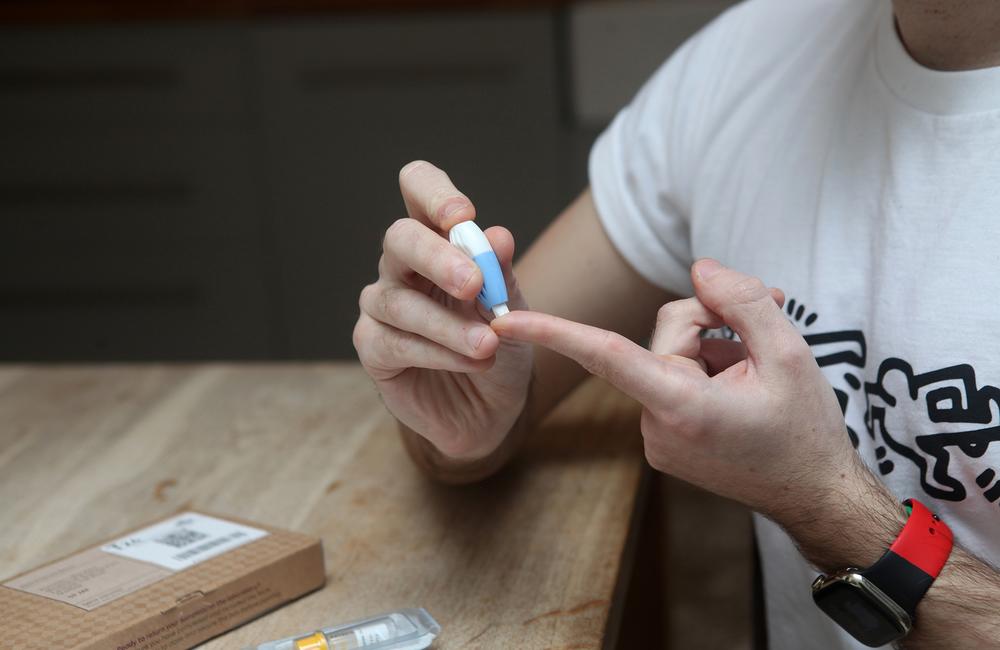
Somewhere between the pandemic and now, a lot of us got comfortable with doing medical things at home that we’d never have considered before. Lateral flow tests were the obvious gateway, but the habit stuck. People are now testing their cholesterol, their thyroid, their hormone levels, their STIs, all from their kitchen table on a Tuesday morning. It’s become remarkably ordinary, remarkably fast.
Whether that’s a good thing depends entirely on what you do with the result.
What Home Testing Actually Covers These Days
The range has expanded well beyond what most people realise. A few years ago, home testing basically meant pregnancy tests and blood glucose monitors. Now you can get kits covering everything from vitamin D and iron deficiency to full hormone panels, liver function, and sexual health screens. Some are finger-prick blood tests, some are urine samples, some are swabs. The quality varies quite a bit, so it matters where you’re getting them from.
The better services, like the home health tests offered through IQ Doctor, send samples off to actual certified labs rather than relying on a colour change on a strip. That distinction matters a lot if you’re using the results to make decisions about your health, because lab-analysed results are considerably more reliable than a home-read rapid test for most things other than a lateral flow.
Reproductive health testing has probably seen the biggest uptake. Fertility hormone panels for women, sperm analysis for men, STI screens, thyroid checks that can flag issues affecting your cycle or conception chances. For anyone who’s sat in a GP waiting room for three weeks to be told they need a blood test, and then waited another week for the results, the appeal is obvious.
The Part Nobody Talks About Enough
Here’s the thing that gets skipped in a lot of the coverage around home testing: getting a result is not the same as understanding it. Seeing that your TSH is 4.2 or your AMH is 6.8 means almost nothing without context. And some people are brilliant at not panicking and googling themselves into a spiral, while others absolutely will. You know which one you are.
That’s not an argument against home testing. It’s more that the testing part is only useful if you’ve got somewhere to take the result. Some services build in a clinician review, which makes a meaningful difference. Others just email you numbers and leave you to it. If you’re choosing a kit, it’s worth checking what the follow-up looks like before you order.
GPs are often more receptive to home test results than people expect, especially if they come from a reputable lab. Turning up with a printout that shows your ferritin levels have been low for six months gives a GP something concrete to work with, rather than you describing vague fatigue and hoping they take it seriously. It can actually speed things up.
Who This Actually Makes Sense For
People with health anxiety sometimes find home testing makes things worse, because suddenly they have access to results they’re not trained to interpret and the temptation to test repeatedly is real. For those people, it’s probably not the right route without some clinical support alongside it.
But for someone who is broadly fine, just curious, or managing a specific ongoing concern like monitoring their thyroid after treatment, or checking in on their reproductive hormones while trying to conceive, home testing can genuinely save time and remove a lot of unnecessary back-and-forth with stretched NHS services. That’s not a criticism of the NHS. It’s just the reality of 2026.
There’s also the privacy factor, which matters more to some people than others. Testing for STIs, or checking something related to fertility or sexual health, isn’t something everyone wants to do via their GP, and that’s a completely legitimate reason to use an at-home option.
The bottom line is fairly simple. Home testing works best as a tool, not a replacement for actual medical advice. Used properly, with results you understand or can get explained, it can be genuinely useful. Just don’t mistake having the number for having the answer.